
How do you sell prevention to a market trained to buy protection?
Research into the business became a position, a brand, a live website, and the sales and research tools behind them.
- Client
- StrikeOut LLC
- Industry
- Industrial lightning prevention
- Role
- Go-to-Market Strategist
- Scope
- Research, positioning, brand, website, and sales and research tools
- Live site
- strikeoutllc.com
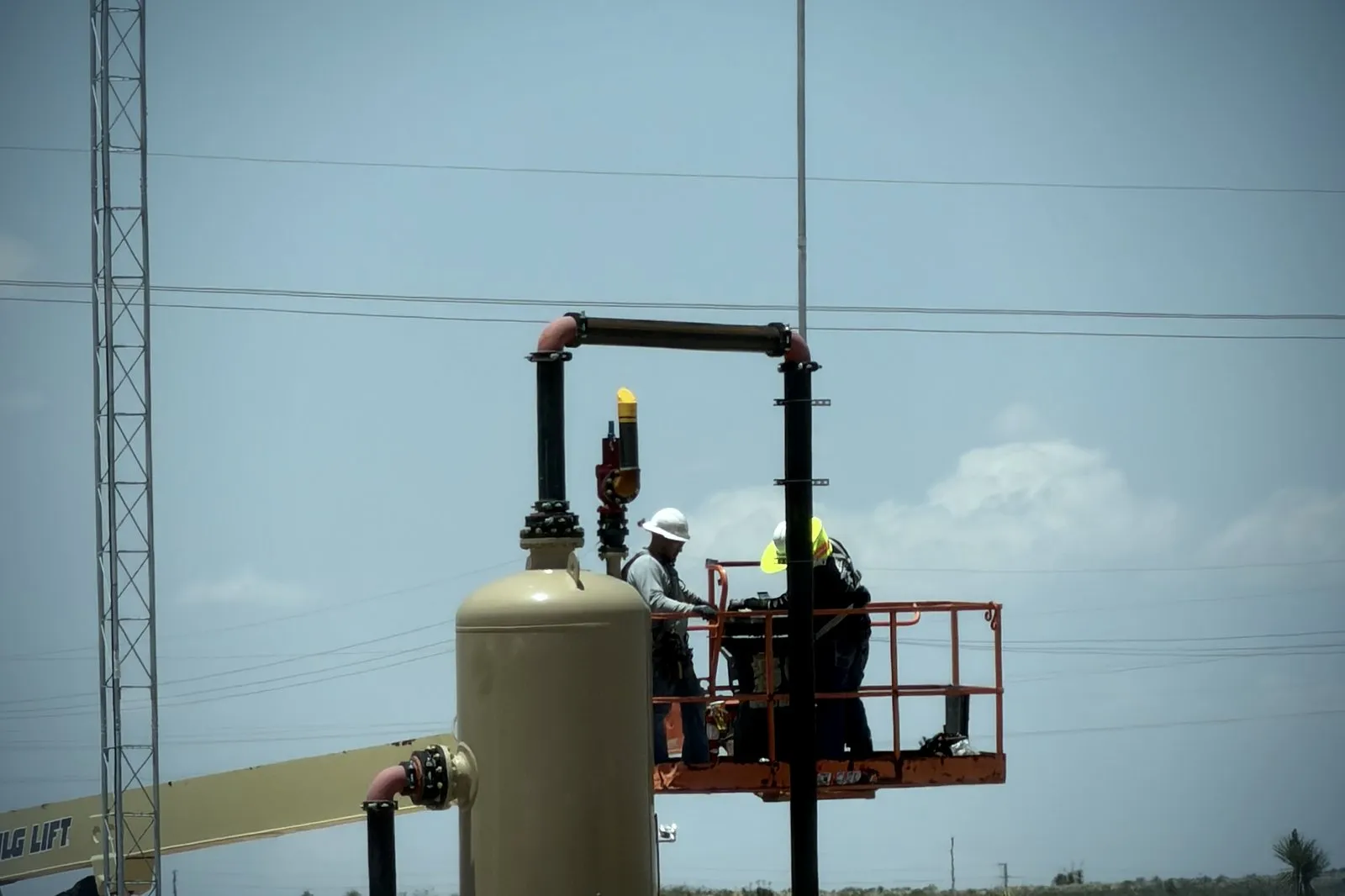
It started with the business, not a website brief.
StrikeOut distributes Dinnteco’s DDCE lightning prevention technology to industrial buyers in the U.S. In December 2025, with a substantial industrial opportunity in view, the work began as company and market research: a SWOT analysis and a growth roadmap covering branding, market visibility, positioning, outreach, and infrastructure.
What the research found
- 01Communication. Buyers needed a plain account of how prevention differs from the conventional lightning protection they already know.
- 02Proof. The strongest proof point, the manufacturer’s record of more than 4,500 installations, appeared nowhere on the website.
- 03Buyer content. Nothing addressed safety, operations, or engineering buyers directly, and there was no downloadable technical documentation.
- 04Presence. A basic website, sparse LinkedIn activity, and a visual identity that did not read as an engineering company.
Those findings set the scope: positioning first, then a brand system to carry it, a rebuilt website, and tools to support prospect conversations.
Prevention, explained as its own category.
Industrial buyers judge lightning safety by what conventional protection does. The positioning asks them to evaluate prevention on its own terms, instead of as an unproven alternative inside a familiar category.
Research profiled five buyer types. The messaging was built around the three whose objections most shape a purchase, and every claim keeps its source visible because these buyers trust documentation over marketing.
Three buyers, and what the messaging leads with
Zero-Incident Safety Leader
- Their question
- Can this choice be defended in an investigation?
- So the messaging leads with
- Documented exposure, clear scope limits, and documentation ready for review.
Uptime-Obsessed Operations Manager
- Their question
- Will this change outcomes, or just add another system?
- So the messaging leads with
- Downtime and maintenance, plus who installs the system and how support works.
Spec-Writing Engineer
- Their question
- Can this be specified while staying code compliant?
- So the messaging leads with
- Specification documents and sources that support the engineer’s own review.
The same choices became working rules for every page and document: prevention language only, “premier distributor” rather than “exclusive,” and one call to action, Request an Assessment.
A brand system built to carry the position.
Deep blues form the base, and Plasma Cyan is kept for emphasis and calls to action, so the system can present technical material consistently from the website to a proposal.

Palette
Montserrat for headlines, Source Sans 3 for body text.
Engineered Prevention.
Selected from three options in the tagline recommendation, which weighed category ownership, fit across the three buyers, and trademark viability. No trademark search or registration is claimed.
Two new marks, Zero Point and Field Intercept, were presented with their reasoning. The client chose to keep a refined lightning-bolt mark, which became a logo suite in five colors with horizontal and stacked lockups.
Same company. A different first impression.
The rebuilt site helps a visitor see how prevention differs from protection, review the proof, find information for their industry, request technical resources, and request an assessment.
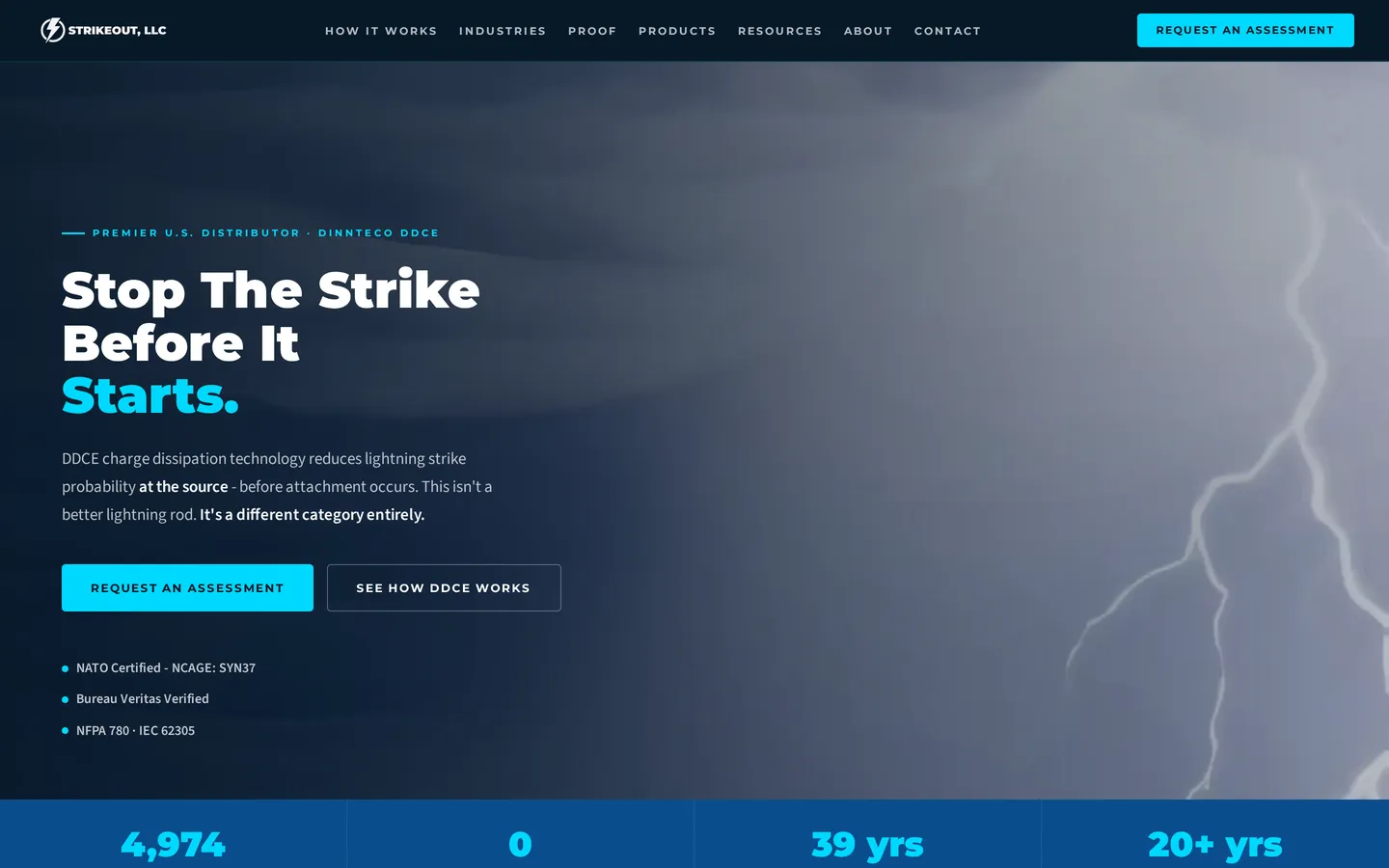
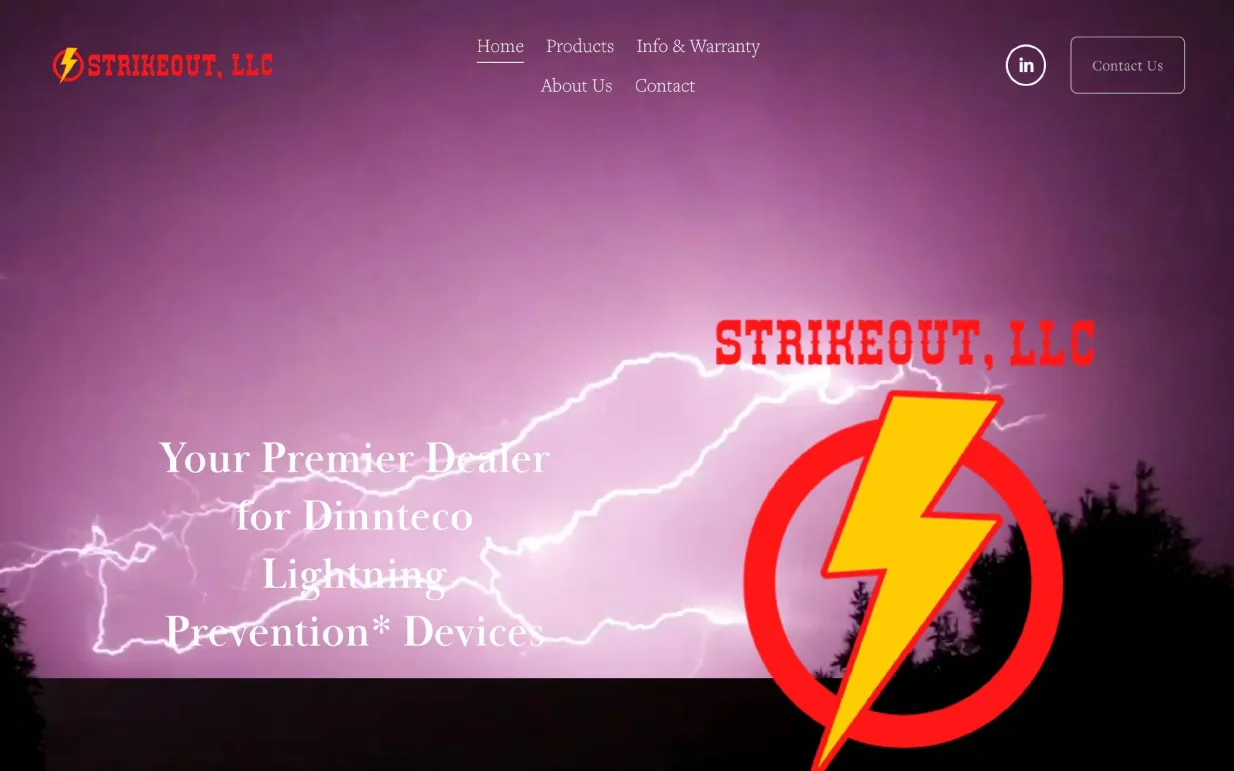
The new site is shown first. Drag the handle up, tap the image, or use the arrow keys to reveal the earlier homepage underneath.
Build note. Eight pages, launched August 5, 2026, through AI-assisted development directed and tested by EWH Consulting. Hosted on Netlify with DNS through Cloudflare, with GA4, Tag Manager, and Search Console. One testing example: a misconfigured Tag Manager trigger on Request an Assessment was found and corrected, so those requests are counted accurately.
Before: the earlier homepage, from the retained capture. After: the live homepage, October 2026.
Research proposes. A person decides.
Collateral, product and standards documents, a Permian field playbook, an ecosystem map, a mobile field tool, and LinkedIn brand assets for prospect conversations.
Target companies and contacts researched across the priority industries, starting with Permian Basin oil and gas, to build the first lead list.
A custom CRM for companies, contacts, deals, and activity, behind a secure login. Built, deployed, and tested in September 2026, and loaded with the lead list.
How the pipeline workflow runs
- 01
Weekly search
A scheduled research agent looks for buying signals and proposes findings.
- 02
Review queue
Nothing enters the CRM until a person approves it.
- 03
Records
Approved findings update companies and contacts, with duplicate checks.
- 04
Follow-up
Deals move through stages, with follow-up dates set by stage.
Runs on request. It covers seven research areas, from lightning and weather to the competitive landscape, adds research on pipeline contacts, and ends with one recommended next action. It does not write to the CRM.
Researched, organized, and drafted short memoranda and a facility-classification matrix for energy-property insurance audiences to review. The latest versions are in final review. No insurer review, endorsement, or premium outcome is claimed.
Authorship. EWH Consulting set the requirements, made the design decisions, tested the builds, and approved the work. AI tools assisted with research, drafting, and technical implementation.
What this work demonstrates.
Hover, tap, or focus a capability to see where it shows up in this project.
A SWOT analysis and growth roadmap that set the scope of the work.
Prevention framed as its own category, with sources kept visible.
Three buyer profiles turned into what each page and document leads with.
Palette, typography, tagline selection, and a logo suite in five colors.
Audit, structure, and testing for an eight-page site, including the Tag Manager fix.
GA4, Search Console, and a Looker Studio dashboard that sets a baseline.
Requirements, testing, and approval for a custom CRM with a human review queue.
A weekly signal search and an on-request daily brief.
Collateral, a field playbook, an ecosystem map, and a mobile field tool.
Risk-assessment drafts researched and organized for insurance audiences.
What is finished, what is in progress, and what is not yet measured.
- Research, SWOT, and growth roadmap
- Positioning and three buyer profiles
- Brand system, tagline, and logo suite
- Eight-page website, live since August 5, 2026
- GA4, Tag Manager, Search Console, and a Looker Studio dashboard
- Custom CRM, weekly research agent, and review queue, built and tested
- Daily research brief, built to run on request
- Sales materials and lead research
- Risk-assessment memoranda and facility matrix: drafted, final review pending
- HubSpot connection: Tag Manager is ready, not yet connected
- Real photography to replace placeholder icons on the homepage industry cards
Revenue, closed sales, installations, and any insurer or premium outcome are not established. Ongoing use of the CRM and research briefs is not documented. Current analytics set a starting baseline.
Selling something buyers need explained?
If your team needs a clearer position, a brand and website that carry it, or practical tools for business development, let’s talk about what you’re building.